
You already know the pattern. The inquiry comes in. Sounds like a good fit. You drive out, spend an hour or two walking the project with them, take notes, ask the right questions. You put together a thorough estimate, send it over, and then nothing. A follow-up email that goes unanswered. Maybe a polite “we are still deciding” that you never hear from again.
Every contractor deals with this. But there is a version of it that crosses from occasional frustration into a real business problem, and if it is happening regularly, the reason is almost never what you think.
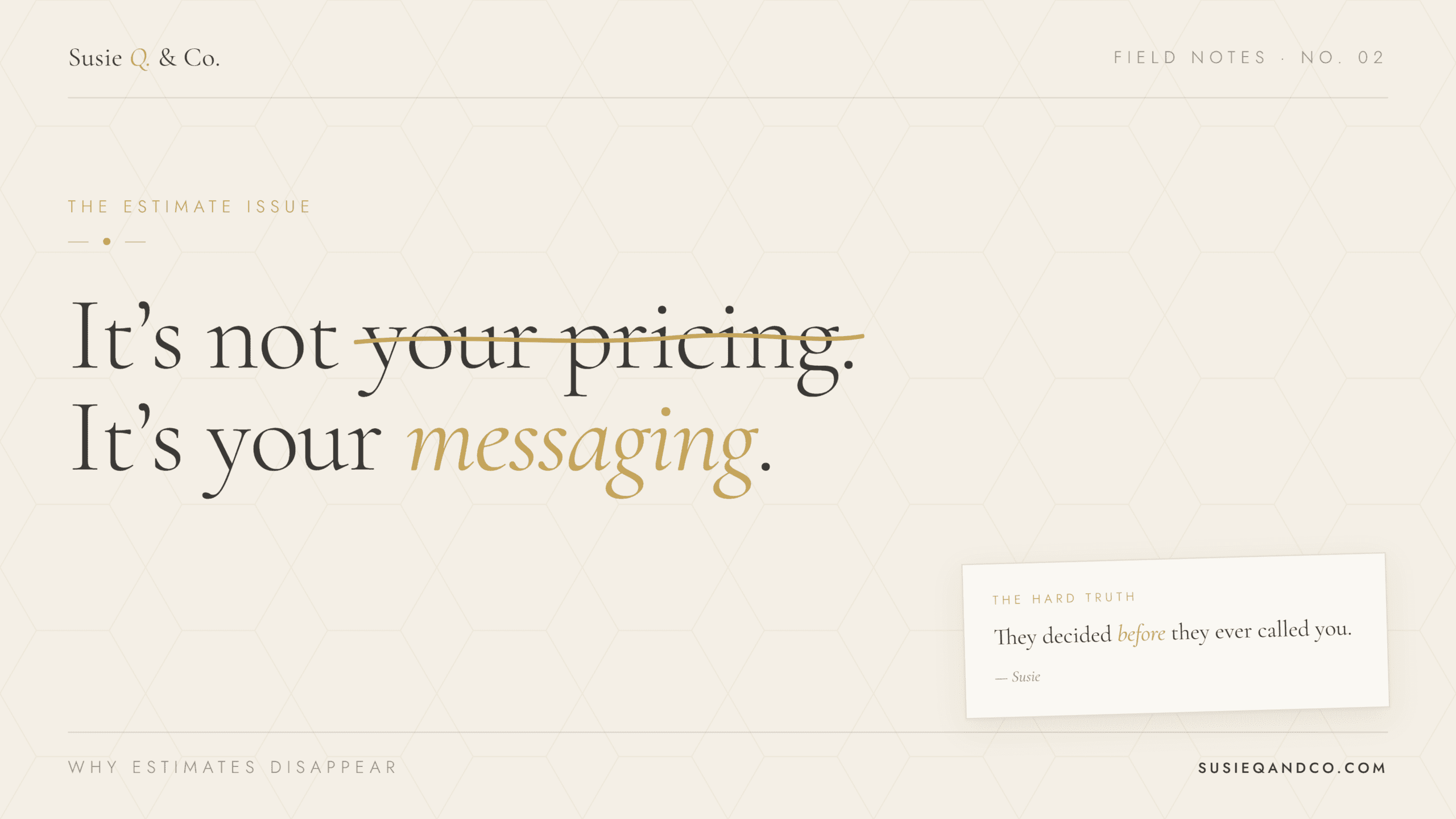
It is not your pricing
The instinct is to assume the estimate was too high. So you tighten your numbers on the next one. Then it happens again. And you start to wonder if you are just too expensive for your market.
Here is what is actually happening in most of these situations. The prospect was not a good fit before they ever called you. They had a budget that did not match their project, or expectations that your business was never going to meet, or they were in early research mode with no real intention of moving forward any time soon. None of that had anything to do with your estimate.
The problem is that nothing in your online presence filtered them out before they got to you.
What your website is actually communicating right now
Most contractor websites send the same message to everyone who lands on them: we do good work, here is some proof, call us. That is a reasonable message. It is also a message that invites every type of inquiry, from the homeowner who is ready to sign and has a realistic budget to the person who is collecting quotes with no intention of moving forward this year.
When your website does not communicate who you are the best fit for, what your process looks like, or what kinds of projects you typically take on, you have no filter. Everyone gets the same invitation. And you end up driving across town for people who were never going to be your client.
The role your online presence plays in pre-qualification
Think about what a homeowner does before they call a contractor for a high-value project. They search. They look at your Google Business Profile, read your reviews, look at your website. They are trying to answer a few specific questions before they pick up the phone: Does this person do the kind of work I need? Have they done it for people like me? Do I trust them enough to have them in my home?
If your online presence answers those questions well, the people who call you are already somewhat qualified. They have seen your work. They have read reviews from people with similar projects. They have a sense of who you are and how you operate. They are not calling to gather information. They are calling because they have already decided they want to talk to you specifically.
That is a fundamentally different call than the one that ends in a ghosted estimate.
What actually changes when you get the messaging right
When your website clearly communicates the type of projects you do best, the investment range those projects typically involve, and the kind of relationship you build with your clients, two things happen. The right people feel seen and they reach out with real intent. The wrong people move on to someone who looks more like what they are actually looking for.
That second part is just as valuable as the first. Every inquiry that is not a fit costs you time, energy, and in some cases the opportunity cost of a real project you could have been working on instead.
Where to look first
Start with your homepage headline. Does it name who you work with and what you do for them, specifically? “Northern Virginia’s trusted remodeling contractor” is vague enough that it could describe anyone. “Design-build additions and whole-home renovations for homeowners in Loudoun and Prince William County” tells a much clearer story about who belongs on this site and who might want to keep looking.
Look at your project portfolio. Do the projects you show reflect the projects you want to attract? If your best work is high-end design-build and your portfolio is full of smaller repairs you took on during a slow period, your portfolio is sending the wrong signal about what you do and who your clients are.
Look at your reviews. Do they describe the experience of working with you in detail, or are they mostly short and generic? Detailed reviews that mention specific project types, specific towns, and specific aspects of the process are trust signals that help the right people self-select before they ever reach out.
The bigger picture
Getting ghosted after an estimate is a symptom. The root cause is almost always that the inquiry should not have happened in the first place, not because the person was bad or dishonest, but because nothing earlier in the process made it clear that they were not the right fit for your business.
When your online presence does that filtering work on your behalf, your time on estimates goes up in quality and down in volume. You spend fewer afternoons on projects that never materialize and more of your time with clients who already trust you before they shake your hand.
That is not just better marketing. That is a better business.


Be the first to comment